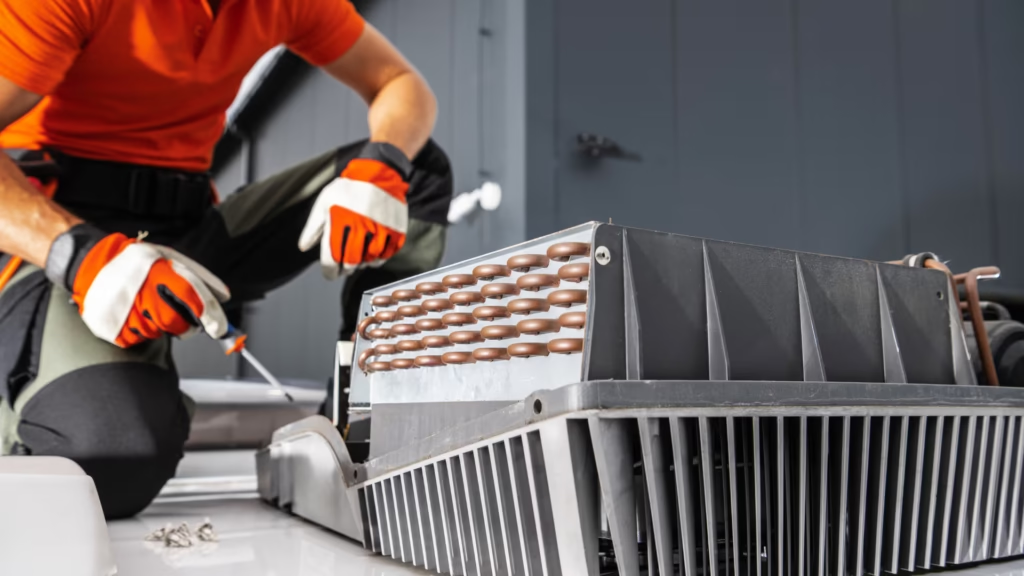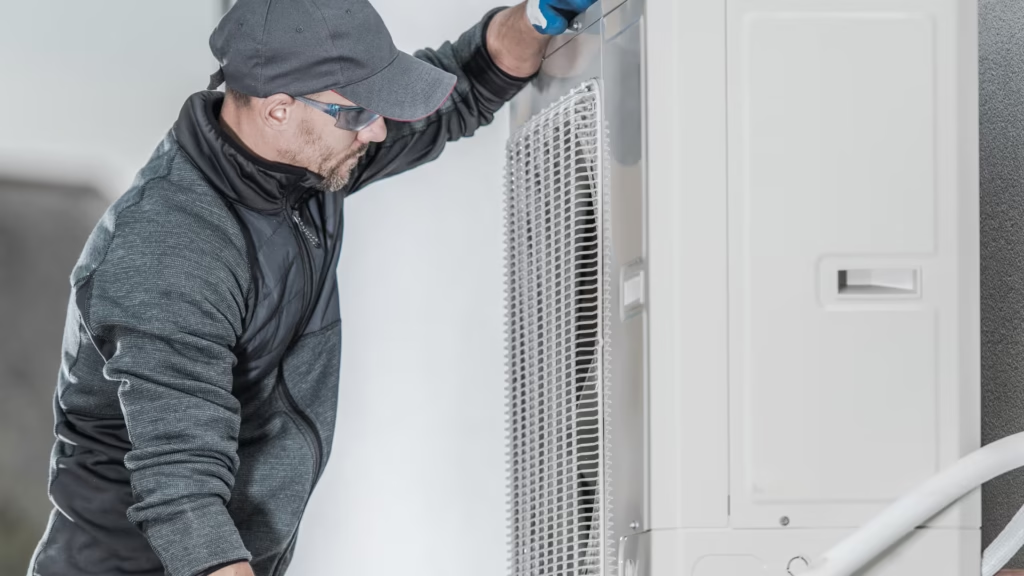
Wondering about AC replacement cost in Sarasota? It’s the question we hear most often once a repair bill crosses a few hundred dollars — and the honest answer is “it depends,” but not in the vague way most contractors mean it. Below we break down what Sarasota and Manatee County homeowners actually pay, what drives the price up or down, and how to decide whether to repair or replace your air conditioner.
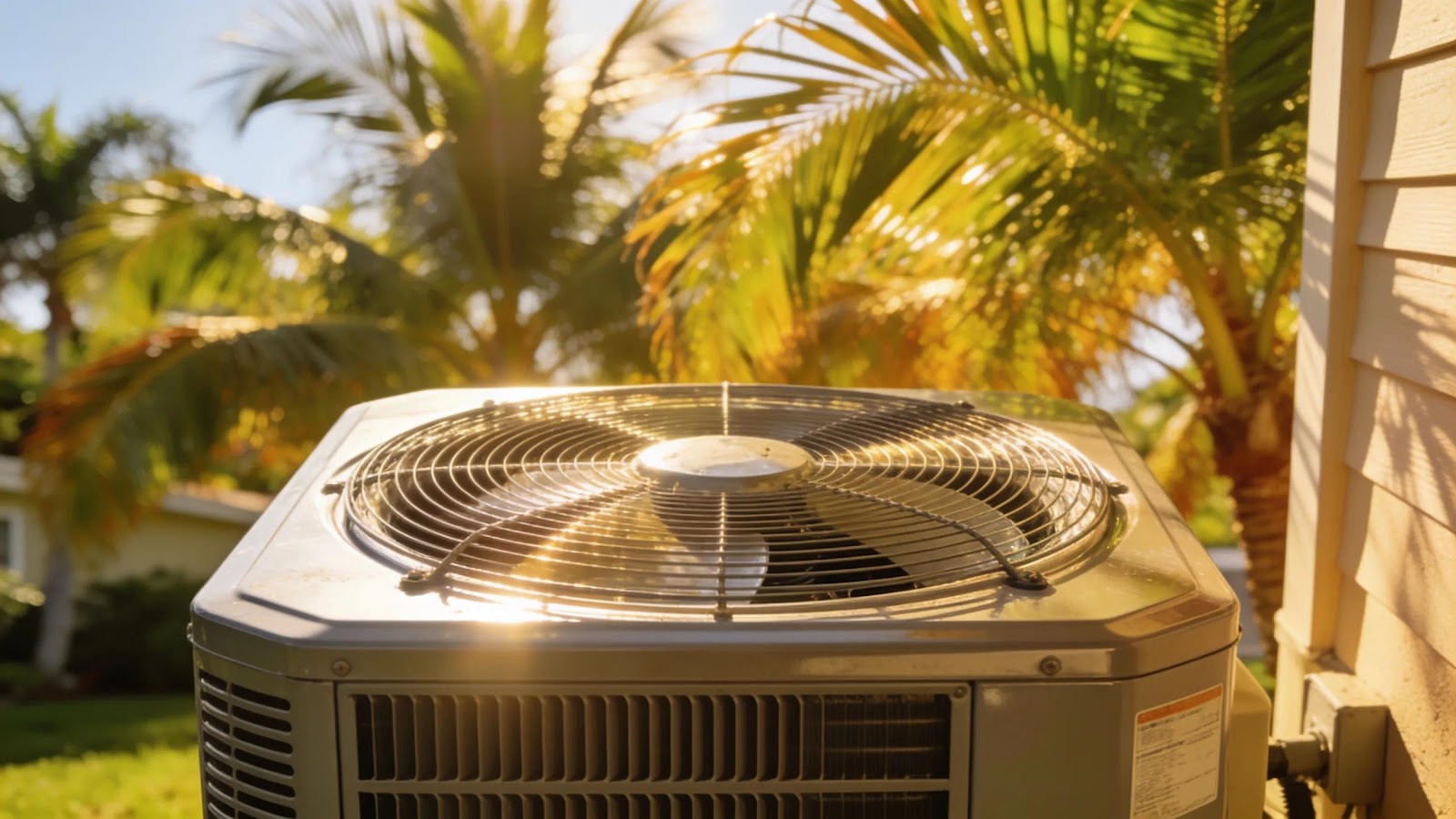
What AC Replacement Costs in Sarasota
For a typical single-family home, a full system replacement (condenser plus air handler) generally lands between $6,000 and $14,000 installed. Where you fall in that range depends on a handful of factors:
- System size (tonnage). A 3-ton system for a 1,600 sq ft home costs meaningfully less than the 5-ton unit a larger home needs. Oversizing wastes money twice — at purchase and on every energy bill after.
- Efficiency rating (SEER2). Florida’s minimum is 15.2 SEER2. Stepping up to 16–18 SEER2 costs more upfront but pays back through lower bills in a climate where the AC runs most of the year.
- Single-stage vs. variable-speed. Variable-speed compressors cost more but remove humidity far better — a real consideration in coastal Sarasota and Manatee County.
- Ductwork condition. If ducts leak or were sized wrong, replacing the box without fixing the ducts throws away efficiency. Budget for sealing or modifications if an inspection finds problems.
- Electrical and code updates. Older homes sometimes need breaker, disconnect, or pad upgrades to meet current code.
Cost by System Type
Not every home needs the same kind of equipment, and the type you choose moves the number as much as the brand does. A straight-cool system with electric heat strips — the most common setup in Southwest Florida — sits at the lower end of the range. A heat pump costs roughly 5–10% more upfront but heats far more efficiently on our few cold mornings, usually paying the difference back within a few winters. Ductless mini-splits price per zone: a single-zone unit for a garage or addition can run $3,000–$5,500, while whole-home multi-zone setups climb quickly and only make sense where ductwork isn’t practical. If your home already has healthy ducts, a conventional split system almost always wins on value.
Sarasota-Specific Factors That Move the Price
Two local realities affect what you’ll pay here that national cost articles never mention. First, coastal corrosion: homes near the Gulf, the bay, or the Intracoastal benefit from coastal-rated condensers with coated coils and corrosion-resistant cabinets, a modest upcharge that meaningfully extends equipment life. Second, wind code: Florida requires condensers to be anchored to withstand hurricane-force winds, and both Sarasota and Manatee County enforce permitting and inspection on full system changeouts. A legitimate quote includes the permit, the tie-downs, and the inspection — a suspiciously cheap one often skips all three, which becomes your problem when you sell the house or file an insurance claim.
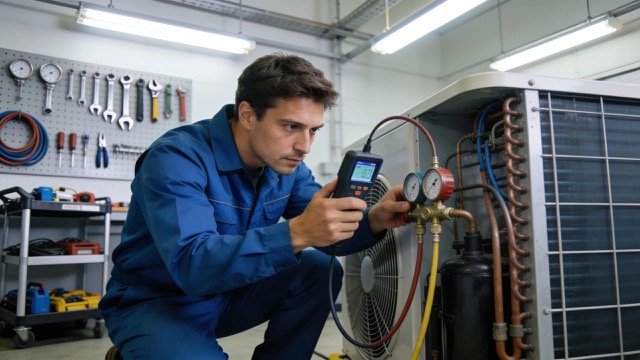
Repair or Replace Air Conditioner? A Simple Framework
The repair-or-replace decision usually comes down to three numbers: the system’s age, the repair estimate, and your energy bills.
- Under 10 years old: repair almost always wins, especially if parts are still under manufacturer warranty.
- 10–15 years old: use the “$5,000 rule” — multiply the repair cost by the system’s age. If the result tops $5,000 (a $600 repair on a 12-year-old unit = $7,200), replacement is usually the smarter spend.
- Over 15 years old: in Florida’s climate, most systems are on borrowed time. Salt air and near-constant runtime age equipment faster here than the national average. Major repairs — compressors, coils — rarely make financial sense.
One more Florida-specific factor: refrigerant. If your system still runs on phased-out refrigerant, even a simple leak repair becomes expensive, because the refrigerant itself is scarce. That alone often tips the math toward replacement. Energy use matters too — if your summer electric bills have crept up year over year despite regular maintenance, the system is telling you its efficiency is gone, and no repair buys it back.
Hidden Costs to Ask About Before You Sign
The difference between two quotes is often hiding in what one of them leaves out. Before you sign anything, ask specifically about: the permit and inspection fees (should be included); a new thermostat, since old ones frequently aren’t compatible with new variable-speed equipment; the condensate drain line, which should be flushed or replaced during changeout — clogged drains are a leading cause of water damage and the mold problems our remediation team gets called for; a new equipment pad if yours has settled or cracked; refrigerant line replacement or flushing, mandatory when switching refrigerant types; and who registers the warranty. Unregistered equipment often defaults from a 10-year parts warranty to 5 — a two-minute form that half of installers forget.
Ways to Bring the Cost Down
Replacement stings less than most homeowners expect once incentives are counted. Utility rebates for high-efficiency equipment, manufacturer seasonal promotions, and financing options can shave a meaningful amount off the sticker price. Timing helps too: scheduling replacement in the shoulder season, rather than during a July breakdown, gives you room to compare options instead of buying under pressure. A maintenance plan also extends the life of your current system, pushing the replacement decision further out.
Think in cost-per-year, not sticker price. A $9,000 system that runs efficiently for 14 well-maintained years costs less per year of comfort than a $6,500 bargain install that struggles for 8 — and that math is before counting the energy savings a properly sized, properly installed system delivers every single month in a climate that cools ten months a year.
What a Trustworthy Replacement Quote Includes
A proper quote is never just a model number and a price. Insist on a load calculation (Manual J) rather than a “same size as before” swap, an inspection of your ductwork, itemized equipment and labor costs, permit handling, and the warranty terms in writing. If a contractor quotes you over the phone without seeing the home, keep shopping. And expect a conversation about humidity, not just temperature — in our climate, a system that cools but doesn’t dehumidify properly leaves you with a cold, damp house and, eventually, mold in the ductwork.
Frequently Asked Questions
How long does an AC replacement take?
Most straightforward replacements are done in one day. Add a day if ductwork modifications or electrical upgrades are needed.
Can I replace just the outdoor unit to save money?
Usually a false economy. Mismatched indoor and outdoor components lose efficiency, may not qualify for warranty coverage, and often fail early. Matched systems exist for a reason.
How do I know what size AC my home needs?
Only a Manual J load calculation can say — it accounts for your square footage, insulation, windows, orientation, and ceiling height. Rules of thumb like “one ton per 500 square feet” routinely oversize systems in Florida, which is why so many homes here are cool but humid.
Does a new AC add value to my home?
In Southwest Florida, yes — buyers and inspectors flag aging HVAC immediately, and a new high-efficiency system is a genuine selling point.
Ready for real numbers instead of ranges? American Air Conditioning & Restoration provides honest, no-pressure replacement quotes across Sarasota and Manatee County — and if a repair is the smarter call, we’ll tell you. Call (941) 739-9731 or schedule service online. Not sure your system is failing? Start with our cooling services team for a diagnostic first.