If you own or manage a home, your HVAC system does more than control temperature. It affects comfort, indoor air quality, humidity, equipment life, and utility bills. In the average U.S. household, heating and cooling account for almost half of the annual energy bill, which is why maintenance and smart service decisions matter so much.
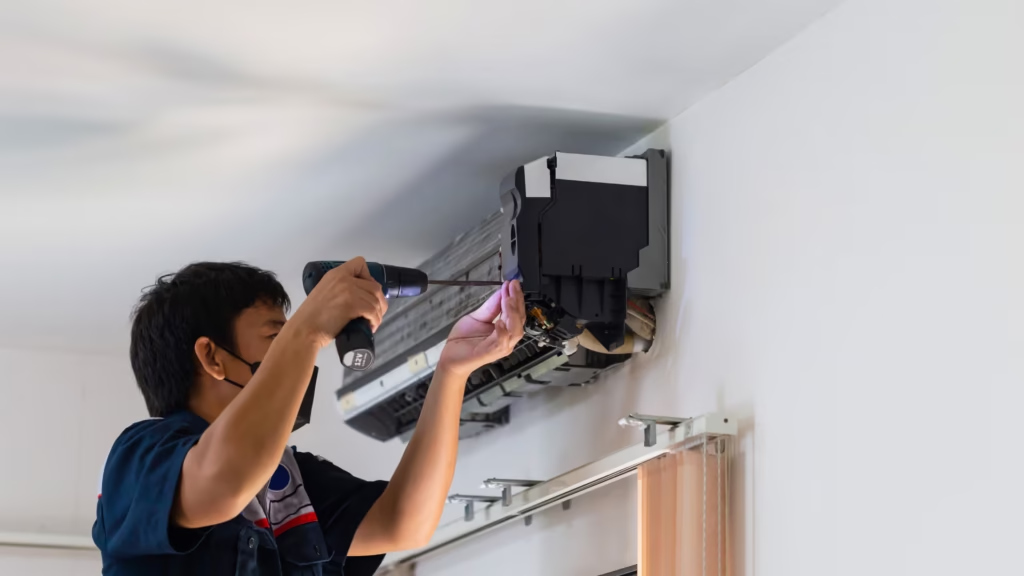
HVAC stands for heating, ventilation, and air conditioning. In most homes, that means some combination of a furnace, central air conditioner, heat pump, air handler, ductwork, thermostat, drain system, and air filter. For small property managers, the same principles apply, but the stakes are higher because one missed service issue can become a resident complaint, a water-damage problem, or an emergency call. ENERGY STAR recommends pre-season checkups for cooling in spring and heating in fall, and DOE guidance reinforces the value of routine upkeep, filter changes, and duct sealing.
Why regular HVAC service matters
Routine service is not just about preventing a total breakdown. It is about keeping the system efficient, safe, and predictable. DOE notes that regular system maintenance can reduce heating and cooling costs by 10 percent or more and prolong equipment life. DOE also reports that routinely replacing or cleaning air filters can lower an air conditioner’s energy use by 5 to 15 percent.
There is also a building-performance side to HVAC service. ENERGY STAR says that sealing and insulating ducts can improve heating and cooling system efficiency by as much as 20 percent, and improper installation can reduce system efficiency by up to 30 percent. That means some comfort complaints that look like “bad equipment” are actually airflow, sizing, or duct issues. This is especially important when evaluating older systems or turnover work in rental properties.
For homeowners, regular service helps catch smaller problems before they become expensive repairs. For property managers, it also supports documentation, warranty compliance, and more predictable maintenance budgeting. Some manufacturers and cost guides note that preventive service plans can reduce service fees and improve scheduling access during peak seasons, when HVAC contractors are busiest.
What a professional HVAC service visit should include
A quality service visit should be more than a quick visual inspection. ENERGY STAR’s maintenance checklist says seasonal HVAC service should include thermostat checks, electrical inspections, voltage and current measurements, lubrication of moving parts where applicable, and other operational checks. NATE also recommends pre-season tune-ups and points homeowners toward certified technicians for installation and service.
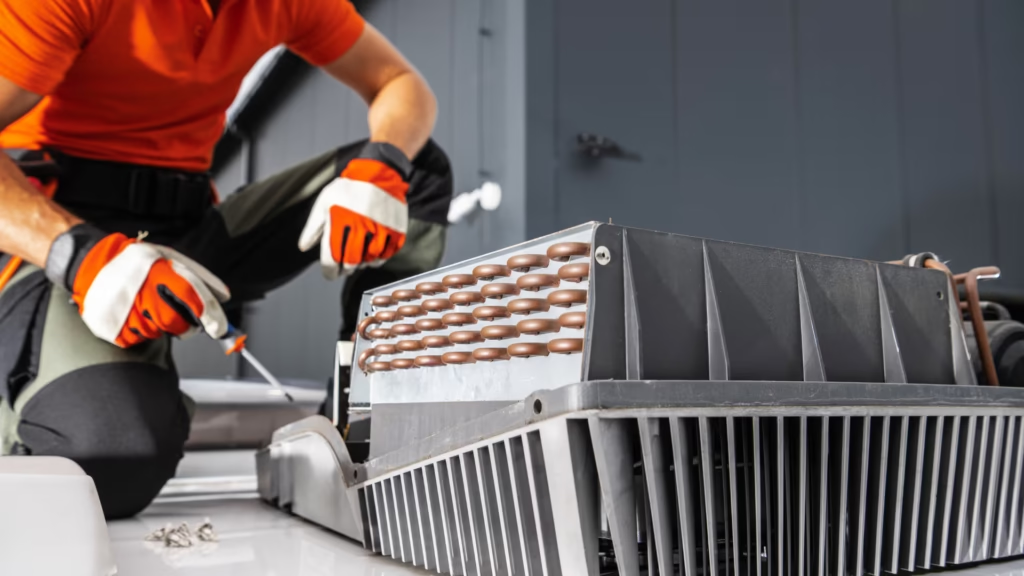
For cooling service, a technician typically checks filter condition, thermostat operation, airflow, blower performance, condensate drainage, coil condition, refrigerant charge, and electrical components such as capacitors and contactors. DOE’s home cooling guidance specifically highlights annual coil inspection, cleaning as needed, filter replacement, outdoor debris removal, and drain-channel maintenance.
For heating service, the checklist should expand to include burner or ignition performance where applicable, heat exchanger and safety control checks, venting review, and combustion-related safety checks on fuel-burning appliances. EPA and CPSC both emphasize annual professional inspection of fuel-burning appliances to help detect carbon monoxide hazards.
A strong service appointment should end with clear documentation. That can include:
- what was inspected
- measurements or test results
- parts nearing failure
- recommended repairs now versus later
- filter size and replacement interval
- model and serial numbers
- any warranty notes
- a suggested next service window
For small property managers, add the unit location, date, resident-reported concerns, and a simple pass/fail summary. That makes turnover planning and future troubleshooting much easier.
Seasonal HVAC maintenance checklist
The best maintenance plans combine quick homeowner tasks with scheduled professional service. The checklist below blends ENERGY STAR, DOE, NATE, EPA, CPSC, and manufacturer guidance into a practical year-round routine. In homes with pets, high dust, construction debris, or heavy system use, filters may need more frequent attention.
| Timing | Step | What to do | DIY or pro |
| Monthly | Check the filter | Inspect filter condition monthly; replace or clean when dirty and follow the manufacturer’s size and airflow direction | DIY |
| Monthly | Check the thermostat | Confirm mode, schedule, batteries if applicable, and realistic setpoints | DIY |
| Monthly | Check airflow | Make sure supply and return grilles are open and not blocked by furniture, rugs, or dust buildup | DIY |
| Monthly | Walk the outdoor unit | Remove leaves, grass, and debris so air can circulate freely around the condenser or heat pump | DIY |
| Spring | Test cooling before peak heat | Run cooling early in the season and note weak airflow, odd smells, or poor temperature response | DIY |
| Spring | Clean around the condenser | Trim vegetation and clear debris before summer | DIY |
| Spring | Inspect condensate drainage | Check for visible overflow, algae, or water damage near the indoor unit | DIY |
| Spring | Schedule cooling tune-up | Have a technician inspect refrigerant, electrical components, coils, blower, controls, and drain performance | Pro |
| Fall | Test heat before cold weather | Run the heating mode early and note delayed ignition, unusual noises, or dusty odors that do not clear | DIY |
| Fall | Test CO alarms | Test all carbon monoxide alarms and replace batteries as needed | DIY |
| Fall | Schedule heating tune-up | Have a technician inspect safety controls, combustion-related components, and heating performance | Pro |
| Turnover or move-in | Update equipment record | Log filter size, model numbers, install year if known, warranty status, and last service date | DIY/admin |
Checklist note: These steps synthesize official maintenance guidance from ENERGY STAR and DOE, homeowner maintenance guidance from NATE and major manufacturers, and CO alarm recommendations from CPSC.
Step-by-step spring and summer cooling checklist
Start with the simple items before summer demand peaks. First, inspect the filter and replace it if airflow is restricted or the media is visibly dirty. Second, verify that the thermostat is set correctly and that all return and supply grilles are open. Third, clear leaves, cottonwood, grass clippings, and other debris from around the outdoor unit. Fourth, look for water near the indoor unit or drain line termination. Fifth, schedule a professional cooling tune-up before severe heat arrives. ENERGY STAR specifically recommends spring pre-season service, and DOE highlights filter care, coil inspection, debris removal, and drain maintenance.
If the system is short-cycling, icing up, tripping breakers, or not reaching setpoint, stop at basic checks and move to a service call. Those symptoms can indicate airflow restrictions, failing electrical components, or refrigerant issues that are not safe or practical for most homeowners to diagnose alone. Refrigerant work must be handled by certified technicians under EPA rules.
Step-by-step fall and winter heating checklist
Before cold weather, replace or inspect the filter, confirm thermostat scheduling, and test the heating system on a mild day so you are not troubleshooting during the first freeze. If you have a fuel-burning furnace, boiler, or other heating appliance, test CO alarms and schedule a professional inspection. CPSC recommends CO alarms on each level of the home and outside sleeping areas, with monthly testing and annual battery replacement guidance. EPA and CPSC also urge professional inspection of fuel-burning appliances to detect carbon monoxide leaks.
For small property managers, fall is also the best time to confirm which units have older equipment, repeated heat-call complaints, or residents who frequently close too many vents or block returns. Many winter comfort problems come from restricted airflow, weak filters, neglected service, or incorrect thermostat settings rather than catastrophic equipment failure. DOE also recommends checking for disconnected or crushed ductwork because airflow loss can keep conditioned air from reaching its destination.
HVAC safety warnings every homeowner should know
Safety warning: If you smell gas, see smoke, notice scorching around electrical components, or your carbon monoxide alarm sounds, leave the area and contact emergency services, your gas utility if applicable, and a qualified HVAC professional. Do not continue troubleshooting. CPSC recommends CO alarms on each level and outside sleeping areas, and EPA/CPSC both emphasize professional inspection of fuel-burning appliances.
Refrigerant is another hard line. EPA states that technicians who maintain, service, repair, or dispose of equipment that could release refrigerants must be certified under Section 608, and the Clean Air Act prohibits intentional venting of regulated refrigerants. For homeowners, that means refrigerant charging, leak repairs, and gauge hookups belong on the professional-only side of the line.
One more caution: routine duct cleaning is not automatically necessary. EPA says it does not recommend routine duct cleaning, only cleaning as needed, such as when there is substantial visible mold growth, vermin infestation, or ducts clogged with excessive dust or debris. If you do hire duct cleaning, EPA says the provider should clean all system components and should be qualified to do so.
DIY maintenance versus professional service
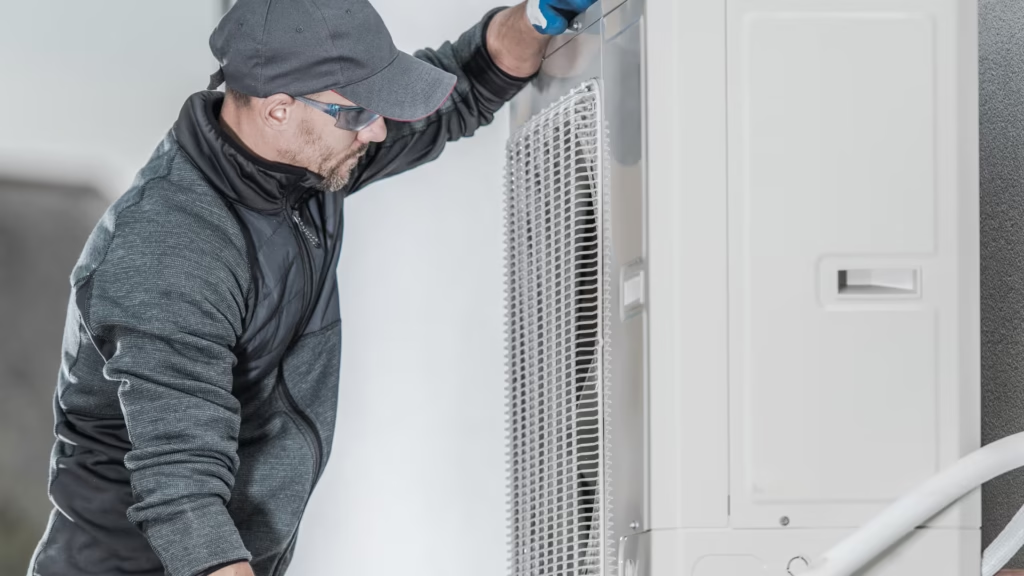
Safe homeowner tasks usually include changing filters, adjusting thermostat schedules, cleaning accessible return grilles, clearing debris from around the outdoor unit, and performing a one-time breaker reset if you clearly know the correct circuit. Be sure power is off before any cleaning that puts your hands near the equipment cabinet, drain line, or service area. Guidance for drain-line cleaning also emphasizes shutting off the thermostat and breaker first.
Professional-only work includes refrigerant handling, internal electrical repairs, capacitor replacement, gas or combustion repairs, blower motor replacement, repeated breaker trips, persistent icing, and any job that requires opening sealed system components or bypassing safety controls. If the issue can damage the compressor, create CO risk, or expose you to high voltage, call a pro.
How to choose the right HVAC contractor
A good contractor should do more than give you a fast price. ENERGY STAR says a bigger system is not always better and that the contractor should inspect the home, ducts, insulation, windows, and airflow. It also recommends written, itemized estimates and careful comparison of efficiency, warranties, and total value rather than price alone.
When replacement is on the table, ask whether the contractor used Manual J for load calculations and Manual S for equipment selection. ACCA identifies Manual J as the national ANSI-recognized residential load-calculation standard, and ENERGY STAR explicitly tells homeowners to ask contractors to verify sizing using Manual J and current design and installation standards. Oversized systems can short-cycle and create humidity-control problems.
For service work, certification matters too. NATE describes itself as the nation’s largest nonprofit certification organization for HVACR technicians, and homeowners can use its contractor search and technician verification tools. For refrigerant-related work, EPA requires technician certification under Section 608. Taken together, those are strong signals to look for when you compare companies.
A concise contractor checklist looks like this:
- written, itemized quote
- home and duct evaluation, not just equipment size guessing
- discussion of airflow, filtration, and humidity
- NATE-certified technicians or equivalent credentials
- EPA Section 608 compliance for refrigerant work
- permit and warranty documentation where applicable
- clear explanation of repair now versus later
- model numbers and efficiency ratings for replacement quotes
Repair or replace
There is no single age at which every HVAC system should be replaced, but age still matters. ENERGY STAR says that if your HVAC equipment is more than 10 years old or no longer keeping the home comfortable, it should be evaluated by a professional. Manufacturer guidance commonly places air conditioner or heat pump life in roughly the 10- to 15-year range and furnace life around 15 to 20 years, though maintenance, climate, installation quality, and run time have a major effect.
Replacement often becomes easier to justify when one or more of these are true:
- the system is old and needs a major repair
- comfort problems keep returning after service
- utility bills are rising without another clear explanation
- the system is oversized, undersized, or poorly installed
- refrigerant issues are recurring
- blower, compressor, or heat-exchanger problems are involved
- the building has been improved with air sealing or insulation and the old system no longer matches the actual load
If you do replace equipment, do not treat it as a box swap. Right-sizing, duct condition, airflow measurement, and matched components are just as important as the brand name. AHRI’s directory is a useful reference for checking certified product performance and matched system data.
Final takeaway
The smartest HVAC strategy is simple: do the safe basics consistently, schedule pre-season service before peak demand, treat refrigerant, combustion, and internal electrical work as professional territory, and insist on proper sizing and written documentation when repair or replacement decisions get bigger. That approach aligns with ENERGY STAR, DOE, ACCA, EPA, CPSC, and NATE guidance, and it works just as well for a single-family homeowner as it does for a small property manager managing several units.
Frequently asked questions
How often should I service my HVAC system?
ENERGY STAR recommends annual pre-season checkups for cooling in spring and heating in fall. Many homes end up with two maintenance visits each year if they have both heating and cooling equipment.
How often should I change my HVAC filter?
Check it monthly, especially during peak-use seasons. DOE, NATE, and manufacturer guidance all support monthly inspection, with replacement or cleaning when dirty; homes with pets, dust, or heavy runtime may need more frequent changes.
Is HVAC maintenance really worth paying for?
Usually yes. DOE says regular maintenance can reduce heating and cooling costs by 10 percent or more, and DOE’s cooling guidance says filter replacement alone can lower AC energy use by 5 to 15 percent.
What should happen during a professional tune-up?
A good tune-up should include thermostat checks, electrical inspection, airflow review, drain and coil review, and safety checks. For heating equipment, combustion-related safety should also be part of the visit.
Can I add refrigerant myself?
Do not plan on it. EPA requires certification for technicians who attach gauges, add refrigerant, remove refrigerant, or otherwise service equipment in ways that could release refrigerant.
Should I have my ducts cleaned every year?
No. EPA does not recommend routine duct cleaning. It recommends cleaning only as needed, such as when there is substantial mold, vermin, or heavy debris contamination.
What thermostat settings save energy?
DOE says you can save as much as 10 percent a year on heating and cooling by setting back or setting up the thermostat 7 to 10 degrees for 8 hours per day when appropriate. DOE also commonly points to 68°F in winter when awake and 78°F in summer when not at home as example reference settings, but comfort, pets, pipes, and humidity still matter.
How do I know if my HVAC system is oversized?
Short cycling, humidity problems, uneven comfort, and repeated on-off operation can be warning signs. ENERGY STAR and ACCA both emphasize proper sizing through Manual J and Manual S rather than rule-of-thumb equipment swaps.
How long do HVAC systems last?
It depends on maintenance and usage, but manufacturer guidance often places AC and heat pump life around 10 to 15 years and furnace life around 15 to 20 years. Older equipment that no longer keeps the home comfortable should be professionally evaluated.
What credentials should I look for in an HVAC contractor?
Look for clear written estimates, proper sizing methods, EPA certification for refrigerant work, and ideally NATE-certified technicians. NATE also offers contractor search and technician verification tools.