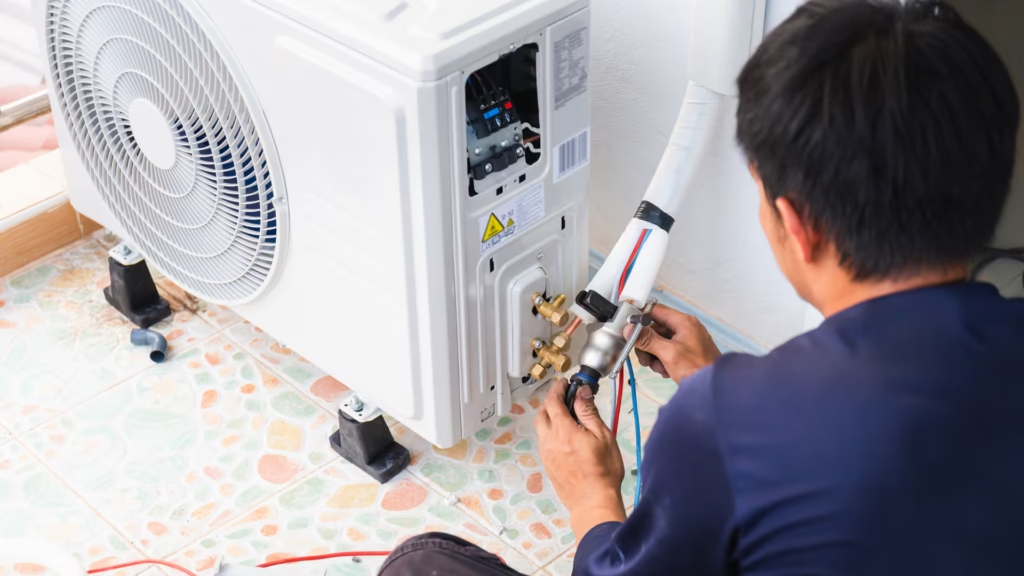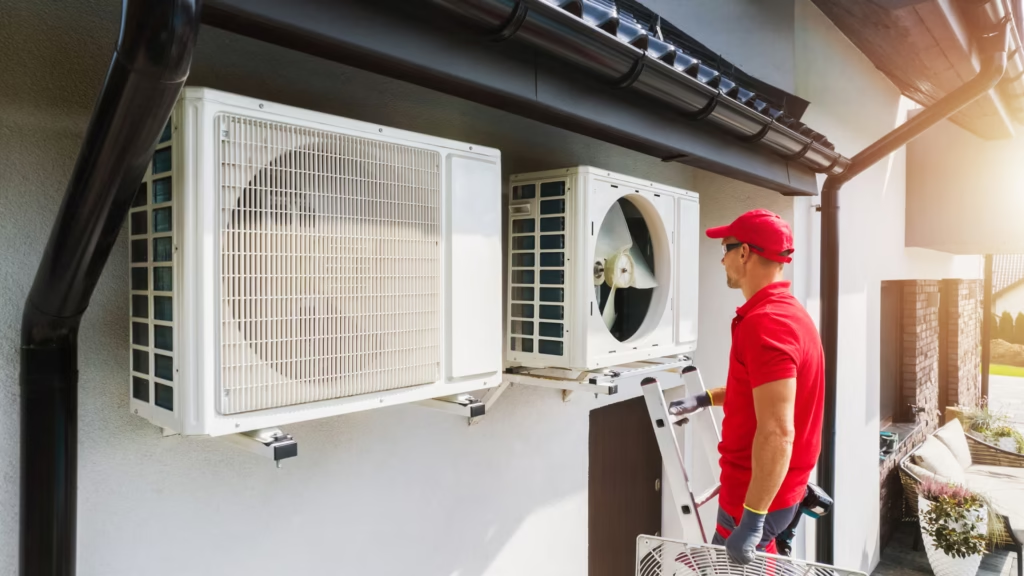
When a residential HVAC system stops cooling, fails to heat evenly, leaks water, makes new noises, or sends your utility bill higher than expected, the real issue is usually bigger than comfort alone. A malfunctioning system can waste energy, shorten equipment life, worsen indoor air quality, and create safety risks if the problem involves electricity, combustion, or refrigerant. EPA, ENERGY STAR, and manufacturer guidance all point to the same conclusion: the best repair results come from a mix of safe homeowner checks, accurate diagnosis, and timely professional service.
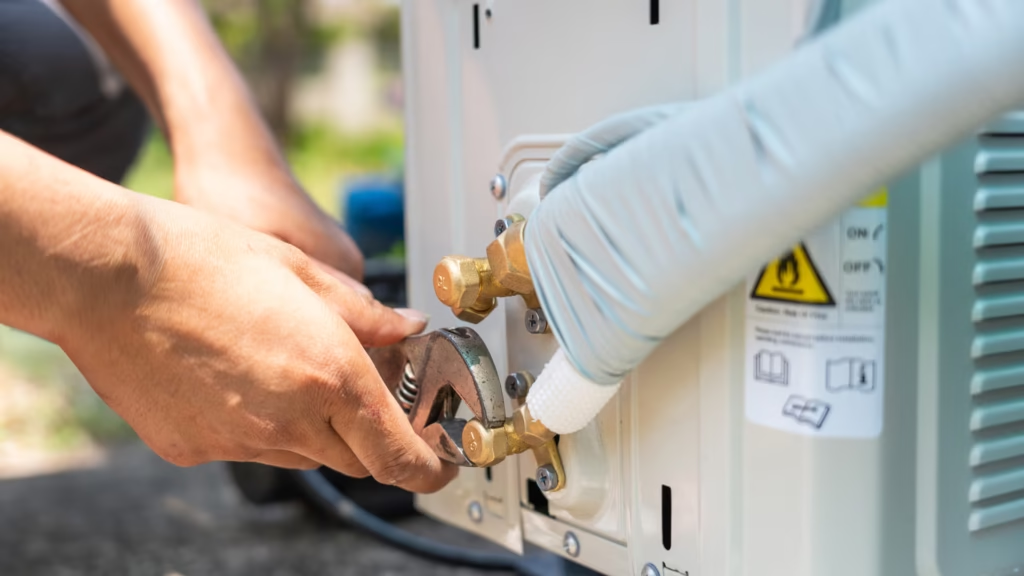
For homeowners, that means knowing what you can check yourself without turning a minor problem into a major one. For property managers, it means protecting occupant comfort, reducing repeat calls, documenting service history, and planning maintenance before seasonal demand peaks. In both cases, the goal is the same: reliable performance, safe operation, lower energy waste, and cost-effective decisions about repair versus replacement.
Common HVAC problems and what they usually mean
Many residential HVAC complaints fall into a few predictable patterns. If the AC runs but does not cool, common culprits include a clogged air filter, restricted airflow, dirty coils, icing, low refrigerant, or a failing component such as a fan motor or compressor. If a furnace is not delivering heat, likely issues include thermostat settings, a dirty filter, airflow restrictions, ignition faults, or burner-related problems. If there is water around the indoor unit, a clogged condensate drain or frozen evaporator coil is a common cause. If a breaker trips repeatedly, or you smell burning, hear buzzing, or notice sparking, the issue may be electrical and should be treated as high priority.
Dirty filters deserve special attention because they are both common and preventable. ENERGY STAR and manufacturer guidance note that poor airflow from a dirty filter can reduce efficiency, increase runtime, and contribute to overheating or icing. That is why filter checks should appear early in both troubleshooting and maintenance routines.
Step-by-step HVAC troubleshooting homeowners can do safely
Before calling for service, homeowners can work through a short list of safe, non-invasive checks.
Start with the thermostat. Confirm the system is set to the correct mode, the setpoint is correct, and the batteries are healthy if the thermostat uses them. If you have a communicating or smart thermostat, check for visible alerts or error messages. Manufacturer homeowner support pages consistently identify thermostat and controls as the first place to start.
Next, inspect the air filter. If it is visibly dirty, replace it with the correct size and type recommended for the system. ENERGY STAR’s homeowner maintenance guidance recommends checking the filter monthly and changing it as needed, at least every three months in many homes.
Then check airflow basics. Make sure supply registers are open, return grilles are not blocked by furniture or dust buildup, and the outdoor unit has clearance from leaves, grass, and debris. Restricted airflow is one of the most common reasons systems underperform.
If the system will not start, check the breaker once. A single reset may solve a nuisance trip, but if the breaker trips again, stop there and call a professional. Carrier specifically warns homeowners not to continue troubleshooting electrical issues if the breaker trips again, and not to handle electrical work unless they are comfortable and competent to do so safely.
If you see water near the indoor unit, inspect the drain area for a visible clog and look for a full emergency pan if your system has one. A clogged condensate drain can cause water damage and can also trigger safety shutoffs on some systems.
If the evaporator coil or refrigerant lines are iced over, turn the system off and allow it to thaw. Replace the filter if dirty, but do not keep forcing the system to run while frozen. Persistent icing after airflow corrections can indicate low refrigerant or another underlying fault that requires professional diagnosis.
When to call a professional HVAC technician right away
Some situations should bypass DIY altogether. Call a qualified HVAC professional immediately if you smell gas, detect burning or electrical odors, see smoke, hear loud metal-on-metal sounds, experience repeated breaker trips, or have a fuel-burning appliance issue paired with a carbon monoxide alarm. EPA and NFPA both stress the importance of CO safety in homes with combustion equipment, and EPA notes that every home should have a CO alarm while fuel-burning appliances should be professionally inspected.
You should also call a professional when the issue involves refrigerant, internal electrical parts, combustion controls, compressor faults, or persistent icing. EPA Section 608 requires technician certification for work that maintains, services, repairs, or disposes of equipment that could release refrigerant to the atmosphere. Manufacturer guidance also warns that more invasive DIY repairs can cause equipment damage or personal injury and may jeopardize warranty protection.
For property managers, a good rule is simple: if the issue affects habitability, risks water damage, creates a combustion or electrical concern, or has already caused one failed resident workaround, dispatch a pro and document the event immediately. That is usually more cost-effective than a repeat trip, resident dissatisfaction, or secondary damage. This is an operational inference, but it is consistent with the maintenance and diagnostic emphasis in NATE and ENERGY STAR guidance.
Preventive HVAC maintenance that reduces breakdowns
The fastest way to reduce repair frequency is to make maintenance routine instead of reactive. ENERGY STAR recommends annual pre-season checkups, specifically spring for cooling and fall for heating, because contractors get busiest during extreme weather and because well-timed service catches problems early. A typical maintenance visit should include thermostat calibration, electrical checks, condensate-drain inspection, control checks, coil cleaning, and refrigerant verification where needed.
At the homeowner level, the recurring checklist is simpler: check filters monthly, replace them when dirty, keep registers and returns unobstructed, keep the outdoor unit clear, monitor drain-line performance during cooling season, and pay attention to new noises, unusual cycling, or comfort changes. A clean filter reduces the energy needed to move air, while clogged filters increase wear and energy use.
For homes with fuel-burning equipment, add carbon monoxide alarm testing to the seasonal checklist. For property managers, add service logs, resident comfort notes, warranty records, and photos of completed work. Those records make future diagnosis faster and improve accountability across multiple units. EPA, NATE, and ENERGY STAR all support the value of inspection, documentation, and recurring service planning, even if they express it in different ways.
Energy-saving upgrades that can lower utility bills
If a system keeps breaking down, repair alone may not be the whole answer. Smart thermostats, duct sealing, air sealing, and higher-efficiency equipment can cut wasted energy and improve comfort. ENERGY STAR says homes with high heating and cooling bills, or homes that sit unoccupied for much of the day, can save about $100 per year with an ENERGY STAR certified smart thermostat. DOE also notes that leaking ducts can add hundreds of dollars per year to heating and cooling bills when conditioned air escapes into unconditioned spaces.
Air sealing also matters because DOE states that uncontrolled air infiltration can account for 30% or more of a home’s heating and cooling costs. That makes air sealing and weatherization useful “repair-adjacent” recommendations when a system seems to run constantly even after technical fixes.
If major components are failing and the system is older, replacement may be more economical. DOE’s home heating and cooling guide notes that systems over 15 years old may merit replacement for efficiency reasons, and DOE also highlights that properly installed air-source heat pumps can deliver two to four times more heat energy than the electricity they consume because they move heat rather than generate it through combustion.
For homeowners considering replacement rather than repeated repair, current federal incentives may help. The IRS says qualifying energy-efficient home improvements may earn up to $3,200 in annual tax credits. ENERGY STAR indicates that eligible central air conditioners can qualify for a credit up to $600, while qualifying air-source heat pumps can qualify for up to $2,000, subject to current eligibility rules and efficiency thresholds.
Indoor air quality tips that support comfort and health
Indoor comfort is not only about temperature. EPA’s indoor air quality guidance says the most effective first step is often source control: remove or reduce the pollutant source, especially moisture and contamination problems. After that, improved ventilation and properly selected filtration can help further.
That means HVAC repair content should look beyond “the unit” and address the home environment. Replace dirty filters on schedule, fix moisture problems that can support mold growth, keep the drain path clear, and make sure ventilation strategies are appropriate for the home. ASHRAE identifies Standards 62.1 and 62.2 as recognized standards for ventilation and indoor air quality, and specifically notes that 62.2 applies to residential buildings.
Filtration upgrades can help, but only when matched correctly to the system. EPA notes that better HVAC filters and portable air cleaners can supplement source control and ventilation, while ASHRAE stresses that filtration performance depends on proper application and airflow. In other words, a “better” filter is not always better if it restricts airflow beyond what the system can handle.
Safety and code considerations for residential HVAC repair
Residential HVAC repair content must be very clear about safety boundaries. Homeowners can usually handle filter changes, thermostat checks, basic register clearing, and light exterior cleanup. They should not open sealed refrigeration circuits, replace internal electrical components, or attempt gas-furnace repairs unless they are properly trained and authorized to do so. EPA certification rules for refrigerant service and manufacturer warnings make that boundary explicit.
Code and permit requirements vary by state and municipality, and this report assumes no specific location. That means the article should avoid promising which repairs do or do not require permits. The safest wording is this: major HVAC work may trigger permits, inspections, or code compliance requirements depending on the jurisdiction, so homeowners and property managers should verify local requirements with the contractor and the local authority having jurisdiction. ASHRAE notes that construction and renovation projects are generally governed by local ordinances or state laws, while ENERGY STAR tells consumers to confirm state license and insurance requirements when hiring a contractor.
What residential HVAC repair typically costs
Repair costs vary by system type, failed part, urgency, labor market, and whether the issue is in heating, cooling, ductwork, or controls. Current national guides show a broad range. Angi places professional HVAC repair at roughly $130 to $2,000 in many cases, with an average around $350, and says the initial service call commonly runs $100 to $250. HomeAdvisor reports average furnace repair costs around $318, with common ranges of $133 to $505 for many jobs, though major furnace repairs can go much higher.
Specific line items can help set expectations. Angi’s current breakdown lists drain line cleaning around $75–$200, capacitor replacement around $100–$250, thermostat work around $150–$350, refrigerant leak repair around $250–$1,500, and compressor work around $800–$3,000. Those figures are useful for budgeting, but they should be presented as national estimates, not promises.
Maintenance agreements can smooth out those costs. Angi notes that maintenance contracts often fall around $150 to $500 per year, and those plans may make sense for homeowners who want predictable service or property managers who need scheduled inspections across multiple units. Financing options vary by company, but practical choices often include contractor-arranged financing, manufacturer promotions, home-improvement lending, and the use of tax credits or utility rebates for qualifying efficiency upgrades. Always compare APR, fees, and prepayment terms before signing.
How to choose a contractor and evaluate a service agreement
A strong contractor-selection section can materially improve conversions because readers often need repair help immediately after reading. ENERGY STAR recommends checking state license and insurance requirements, asking for references, getting written itemized estimates, and expecting a real home evaluation rather than a rushed guess. It also says the contractor should inspect ducts and measure airflow, because bigger equipment is not automatically better and proper sizing matters.
NATE adds another trust signal: asking for a NATE-certified technician. NATE says homeowners benefit from lower utility bills through proper installation and maintenance, fewer callbacks and warranty returns, and efficient service when a certified technician is involved.
If you are reviewing a maintenance agreement, look for specifics. It should state how many visits are included, whether seasonal tune-ups are separate, what inspections and cleaning tasks are covered, whether diagnostics or after-hours service are discounted, whether filter changes are included, and how warranty claims are documented. For property managers, add response-time expectations, unit-level reporting, tenant communication procedures, and approval thresholds for larger repairs. These service-agreement items are practical editorial recommendations built from the contractor-evaluation themes in ENERGY STAR and NATE guidance.
FAQs
How often should I replace my HVAC filter?
Check it monthly and replace it when dirty. In many homes, that means at least every three months, but pets, remodeling dust, wildfire smoke, or heavy system use can require more frequent changes.
Why is my AC running but not cooling the house?
Common causes include a dirty filter, blocked airflow, dirty coils, refrigerant issues, or frozen components. Start with thermostat and filter checks, then call a pro if the issue continues.
What should I do if my furnace is not blowing warm air?
Check that the thermostat is set to Heat, confirm the setpoint is correct, and inspect the filter. A dirty filter can restrict airflow enough to trigger safety shutdowns.
Is it safe to reset a tripped HVAC breaker?
A single reset may be reasonable, but if the breaker trips again, stop and call a technician. Repeated trips point to a deeper electrical problem.
Can I clean a clogged AC drain line myself?
Sometimes yes, if the clog is accessible and you follow safe owner-maintenance steps. But if water damage, repeated clogs, or system shutdowns are involved, professional service is the safer choice.
When is a frozen AC coil an emergency?
Turn the system off and let it thaw. If icing returns after replacing a dirty filter and restoring airflow, call a professional because persistent freezing can signal refrigerant or mechanical problems.
Do I need annual HVAC maintenance even if the system seems fine?
Yes. ENERGY STAR recommends annual pre-season checkups to keep cooling and heating equipment at peak performance and catch problems before they become expensive.
Can better filters improve indoor air quality?
Often yes, but filtration works best when combined with source control and appropriate ventilation. Filters also need to be matched to the HVAC system so they do not create excessive airflow resistance.
Should I repair or replace an older HVAC system?
If the system is older, inefficient, or facing repeated major repairs, replacement may be more economical over time. DOE notes that systems over 15 years old can be good candidates for efficiency upgrades.
What credentials should I look for in an HVAC contractor?
At a minimum, confirm local licensing and insurance requirements. It is also smart to ask for NATE-certified technicians and written, itemized estimates.
Do service agreements really save money?
They can, especially when they include seasonal tune-ups, reduced diagnostic fees, and early problem detection. Current national estimates place many maintenance contracts in the roughly $150–$500 yearly range.
Are tax credits available if I replace my HVAC system with a more efficient one?
Potentially yes. The IRS currently says qualifying energy-efficient home improvements may be eligible for annual credits up to $3,200, and ENERGY STAR lists current eligibility details for qualifying central AC and heat pumps.