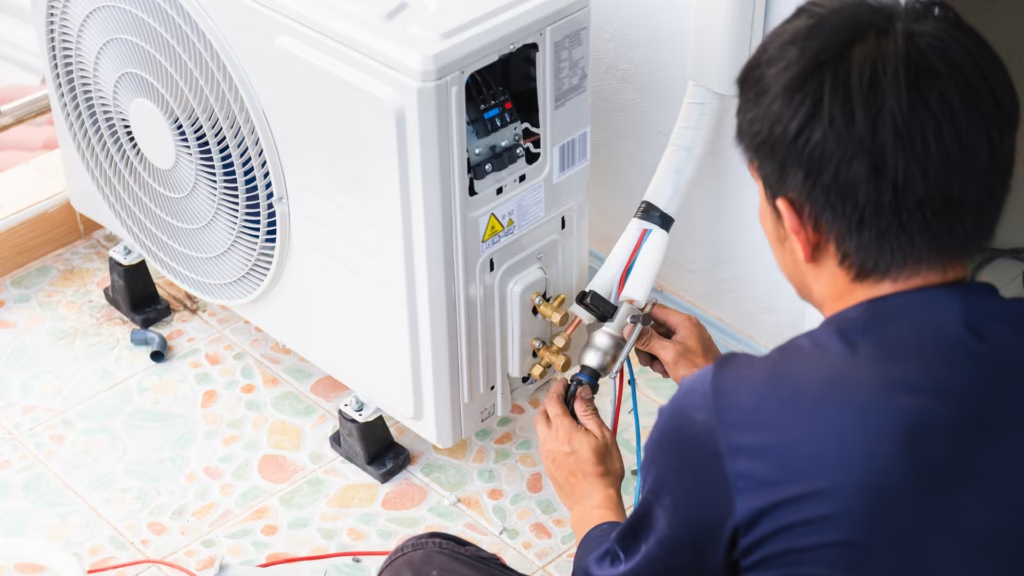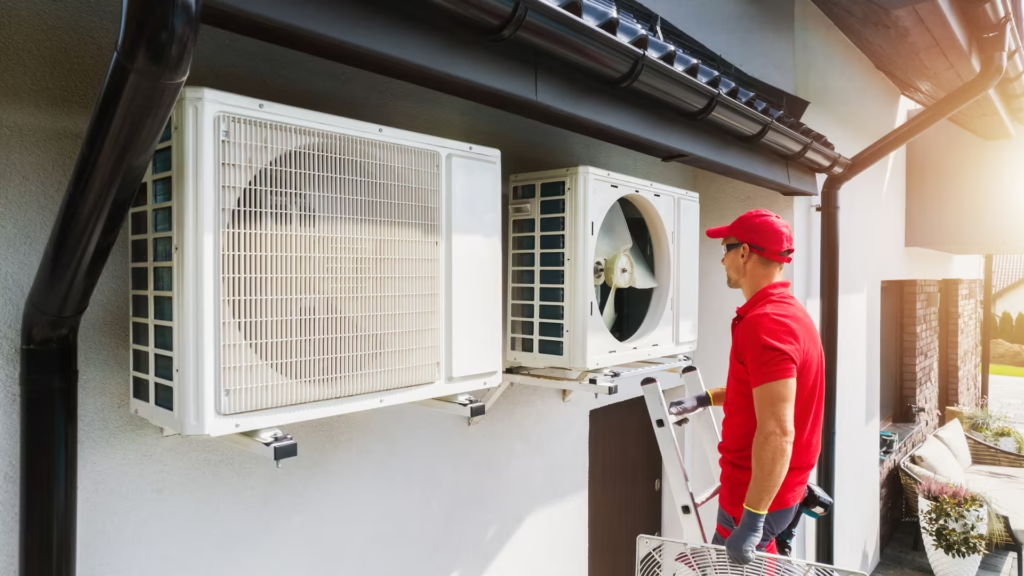
Most residential and light commercial HVAC systems depend on the same fundamentals: adequate airflow, clean heat-transfer surfaces, correct controls, proper drainage, and manufacturer-correct refrigerant charge. DOE explains that forced-air systems use ducts that can serve furnaces, central air conditioners, and heat pumps, and that maintenance should focus on duct condition, filters, and airflow. DOE also notes that regular maintenance of filters, coils, fins, and refrigerant lines is essential because neglected equipment steadily loses performance while energy use rises.
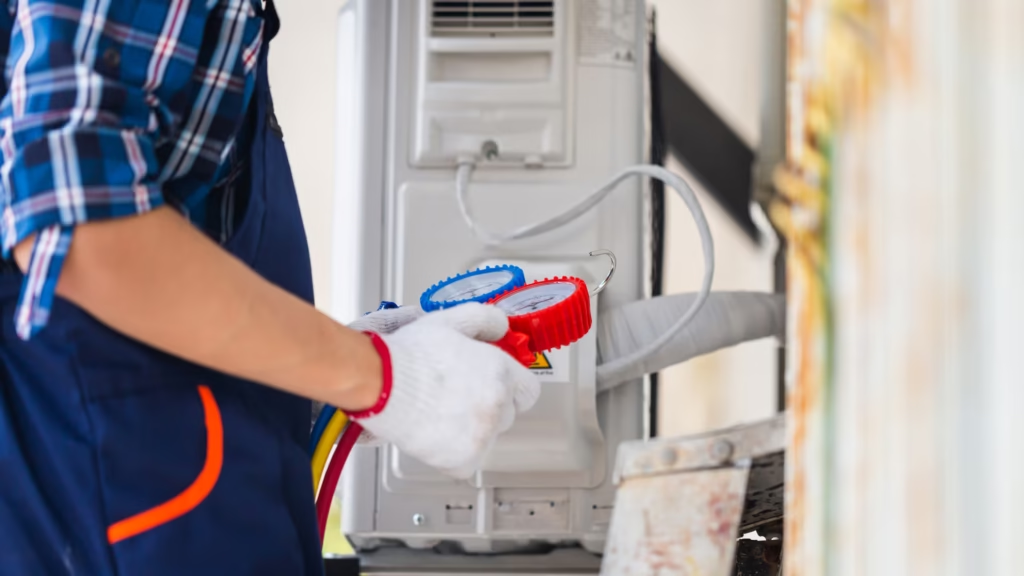
A homeowner-safe maintenance plan usually covers filter checks, thermostat review, outdoor debris reA homeowner-safe maintenance plan usually covers filter checks, thermostat review, outdoor debris removal, visual inspection, and basic housekeeping around accessible equipment. A technician-level plan goes further: coil inspection and cleaning, static-pressure and airflow evaluation, condensate testing, electrical tightening and measurement, combustion checks on fuel-burning equipment, and refrigerant diagnostics if cooling performance is off. ENERGY STAR’s maintenance checklist specifically calls out evaporator and condenser coil cleaning, refrigerant verification, condensate-drain inspection, blower adjustment, and combustion checks for heating equipment.
The financial case is equally strong. ENERGY STAR says airflow problems can reduce efficiency by up to 15%, and leaky ducts can reduce heating and cooling efficiency by as much as 20%. It also notes that improper installation of new equipment can reduce efficiency by up to 30%. In plain language: even expensive equipment underperforms when airflow, ductwork, commissioning, or maintenance is neglected.
For small commercial managers, maintenance discipline matters even more. ENERGY STAR says an average commercial building can save up to 30% on energy bills through smart operations and maintenance, and ASHRAE identifies Standard 180 as the standard practice for inspection and maintenance of commercial building HVAC systems. ASHRAE also notes that rooftop units generally require more maintenance and have shorter service life than comparable equipment protected in interior mechanical rooms.
This simplified layout is representative of typical split forced-air systems described by DOE: return air passes through a filter, the blower moves air across heating or cooling components, and conditioned air is distributed through supply ducts. That basic path is why filters, blower cleanliness, duct leakage, coil condition, and thermostat accuracy have such a large effect on comfort and operating cost.
Seasonal maintenance checklist and troubleshooting
The checklist below consolidates homeowner-safe tasks from ENERGY STAR’s maintenance checklist, DOE’s air-conditioner maintenance guidance, and NATE’s homeowner maintenance tips. Time-to-complete figures are planning estimates for a typical single-system property and assume normal access; multi-zone homes, rooftop units, and small commercial sites will take longer.
| Season | Best timing window | Task | DIY or pro | Estimated time |
| Spring | 4–8 weeks before regular cooling season | Check filter size, fit, and condition; replace if dirty | DIY | 10–15 min |
| Spring | 4–8 weeks before cooling season | Clear leaves, mulch, lint, and weeds around outdoor unit; maintain about 2 feet of clearance where possible | DIY | 20–30 min |
| Spring | 4–8 weeks before cooling season | Inspect thermostat settings, batteries if applicable, and schedule | DIY | 10–20 min |
| Spring | 4–6 weeks before cooling season | Inspect visible insulation on refrigerant line set for damage | DIY visual only | 5–10 min |
| Spring | 2–6 weeks before cooling season | Flush or inspect accessible condensate drain and drain pan area | DIY light maintenance or pro | 15–30 min |
| Spring | Before first sustained heat wave | Full cooling tune-up: coils, blower, electrical, drain, airflow, refrigerant verification if needed | Pro | 60–120 min |
| Summer | Monthly during heavy use | Inspect filter; replace if loaded | DIY | 10–15 min |
| Summer | Monthly | Walk the property: listen for new noises, check airflow at registers, check for icing or water around indoor unit | DIY | 10–20 min |
| Summer | Monthly | Keep supply and return grilles open and unobstructed | DIY | 10 min |
| Summer | After storms or mowing | Remove grass clippings and debris from outdoor cabinet surface | DIY | 10–15 min |
| Summer | When bills spike or comfort drops | Trigger diagnostic call if system runs long, short-cycles, freezes, or fails to dehumidify | Pro | 60–120 min |
| Fall | 4–8 weeks before heating season | Check filters and thermostat operation | DIY | 10–20 min |
| Fall | Before first heating run | Test heating mode; note odors, ignition delay, weak airflow, or unusual shutdowns | DIY observation | 10–15 min |
| Fall | Before sustained cold weather | Professional heating inspection for burners, gas pressure, heat exchanger, safeties, blower, and controls | Pro | 60–120 min |
| Fall | For heat pumps | Verify defrost operation during a professional seasonal check | Pro | part of tune-up |
| Winter | Monthly during peak use | Inspect filter and clear blocked returns/registers | DIY | 10–15 min |
| Winter | During freezing weather | Watch for condensate issues, especially where pumps or drain lines can be affected by temperature | DIY observation | 5–10 min |
| Winter | After severe weather | Check breaker status and outdoor-unit condition | DIY | 10 min |
| Winter | End of season or before prolonged vacancy | Review thermostat setbacks and freeze-protection settings | DIY | 10–15 min |
DOE advises checking or replacing filters every month or two during cooling season if conditions are dusty or if pets are present, keeping outdoor condensers free of debris with clearance around the cabinet, and periodically clearing drain channels. For winter protection, DOE says central AC outdoor units may be covered, but heat-pump outdoor units should not be covered because they must operate in heating mode. ENERGY STAR recommends checking filters monthly and tuning HVAC equipment yearly.
A useful dividing line is this: if the task involves sealed refrigerant components, combustion analysis, electrical diagnostics, deep coil access, or opening equipment panels beyond normal homeowner access, it belongs to a qualified technician. EPA’s Section 608 rules make that especially clear for refrigerant work.
Before the technician arrives, NATE recommends having the brand/model, approximate age, last service date, last filter change, breaker status, the onset of the problem, unusual noises or odors, and any visible leakage ready. That shortens diagnosis time and improves service quality.
Service schedules, contracts, and hiring
The simplest schedule that works for most owners is: filter check every month, cooling review in spring, heating review in fall, and a professional inspection any time you see repeated tripping, water overflow, icing, short cycling, or abnormal noise. ENERGY STAR recommends a yearly tune-up, while consumer service-cost guides and contractor advice commonly recommend twice-yearly service—spring for cooling and fall for heating—especially for split systems, heat pumps, or properties that cannot tolerate downtime.
The cost ranges above reflect broad U.S. consumer pricing research showing tune-ups in the ballpark of $70–$200, annual service around $150–$300 for one or two tune-ups in many markets, and maintenance contracts commonly around $150–$500 yearly depending on inclusions. Emergency labor and after-hours dispatch can cost materially more than standard daytime service. Multi-unit homes, inverter systems, mini-splits with multiple heads, rooftop units, and hard-to-access equipment usually price above the low end.
A solid service agreement should define the maintenance checklist, number of visits, response times, exclusions, and documentation. ACCA’s homeowner checklist exists specifically so owners can compare actual maintenance content rather than marketing language, and NATE encourages asking whether the contractor will send a certified technician. ENERGY STAR also advises checking license and insurance requirements in your state and expecting a true home evaluation rather than a one-size-fits-all recommendation.
Key questions to ask a technician or company
- Are your technicians licensed where required and properly insured?
- Do you use NATE-certified technicians, and can you dispatch one for this visit?
- What exact maintenance tasks are included in your tune-up?
- Will you document airflow, drain condition, electrical health, and any measured issues?
- If refrigerant is suspected, will an EPA Section 608-certified technician handle that work?
- How do you evaluate duct leakage, static pressure, or room airflow imbalance?
- What is not included in the maintenance price?
- For replacement quotes, will you size the system based on the home/building and inspect ducts?
Safety, tools, and efficiency
Safety and compliance should shape every maintenance decision. First, filter changes are simple, but filter upgrades are not automatically harmless. ASHRAE advises that if you move to a higher-MERV filter, it should fit and seal correctly and your system must be able to handle the added pressure drop; Trane and Carrier similarly note that higher-MERV filters can restrict airflow in some systems. Second, refrigerant work is not DIY territory: EPA requires certification for technicians who attach gauges or add or remove refrigerant, and federal rules prohibit intentional venting. Third, if you operate fuel-burning equipment, CPSC urges annual professional inspection and the use of CO alarms on every level and outside sleeping areas.
Permit requirements are local, not universal, so replacements, new circuits, gas-line changes, or substantial duct alterations should be checked with the local building department before work begins. That is especially important for landlords and small commercial managers, where inspection, documentation, and insurer expectations are typically stricter than for an owner-occupied home. ENERGY STAR also recommends understanding state contractor licensing and insurance requirements before hiring.
DIY tools and parts checklist
- Correct replacement filter(s) in the manufacturer-recommended size
- Screwdriver set for grille access
- Flashlight or headlamp
- Vacuum with brush attachment for grilles and light debris
- Garden hose for gentle exterior debris rinse where the manufacturer allows
- Fin comb for minor fin straightening, used carefully
- Thermostat batteries, if your thermostat uses them
- Gloves, safety glasses, and a notepad or photo log
- Condensate treatment or wet/dry vacuum only if appropriate for your setup and comfort level
These tools are sufficient for homeowner-safe maintenance such as filter changes, grille cleaning, outdoor housekeeping, and basic visual inspection. DOE specifically mentions filter upkeep, drain clearing, and fin-comb use by a qualified contractor for bent fins; that is a reminder to stay within your skill level rather than turning routine maintenance into accidental damage.
Energy-saving tips with practical ROI estimates
Heating and cooling usually represent more than $900 per year for the average household, so even modest efficiency gains compound quickly. An ENERGY STAR smart thermostat can save about $50 per year for many families and approximately $100 per year in homes with high heating and cooling bills or homes that are unoccupied for much of the day. With smart thermostat hardware often around $100–$200 and total thermostat installation averaging about $200 in the broader market, simple payback is often around one to four years for DIY-friendly installations and somewhat longer when professional wiring work is needed.
Air sealing is another strong value move. DOE says sealing uncontrolled air leaks can save 10%–20% on heating and cooling bills. Using ENERGY STAR’s “more than $900 a year” HVAC spending benchmark, that implies an illustrative savings range of roughly $90–$180 per year for some households, before accounting for climate and occupant behavior.
Duct sealing can be even more important when ducts run through attics, crawlspaces, garages, or other unconditioned areas. ENERGY STAR says a typical forced-air home can lose about 20%–30% of ducted air through leaks and poor connections, and that sealing and insulating ducts can improve HVAC efficiency by as much as 20%, often paying for itself in energy savings. National consumer-market pricing for professional duct sealing is broad—often around $500 to $4,000 depending on layout and access—so the best candidates are properties with obvious comfort imbalance, visible duct leaks, or ducts outside conditioned space.
Routine upkeep also has a defensible energy case even when the savings are harder to isolate. ENERGY STAR says dirty filters waste energy, and the same program notes that airflow problems can reduce system efficiency by up to 15%. Using the same household spending benchmark, a 5%–15% recoverable efficiency improvement would imply a rough illustrative value of about $45–$135 per year, though actual results depend on the system’s condition and whether the root cause is truly airflow-related.
FAQs
How often should HVAC be serviced?
A practical default is monthly filter checks, a cooling-side review in spring, and a heating-side review in fall. ENERGY STAR recommends yearly tune-ups, while many contractors and consumer service guides recommend twice-yearly service for systems that both heat and cool or for properties where downtime is expensive.
Can I do HVAC maintenance myself?
Yes, but only the homeowner-safe portion: filters, thermostat checks, register clearance, debris removal around the outdoor unit, and visual inspection. Refrigerant, combustion, deep electrical, blower, airflow, and advanced coil work should be handled by qualified professionals, and EPA certification is required for refrigerant-circuit work.
What is the most important maintenance task?
For most ducted systems, it is regular filter inspection and replacement. ENERGY STAR says a dirty filter increases energy costs and can damage equipment, and DOE says restricted airflow allows dirt to reach the evaporator coil and degrades heat transfer.
When should I call a technician immediately?
Call right away for no cooling during extreme weather, breaker trips that repeat, burning smells, gas smell, water overflow, visible ice on the coil or refrigerant line, very loud mechanical or electrical noises, or carbon monoxide alarm activation. DOE, CPSC, and manufacturer troubleshooting guidance all treat those as escalation points rather than DIY projects.
Is a maintenance plan worth it?
Often, yes—especially for landlords, small offices, retail spaces, or owners who otherwise forget seasonal service. HomeAdvisor notes that service plans can lock in regular visits, priority scheduling, and minor repair benefits; NATE and ACCA emphasize that the real value depends on technician qualifications and the actual checklist included.