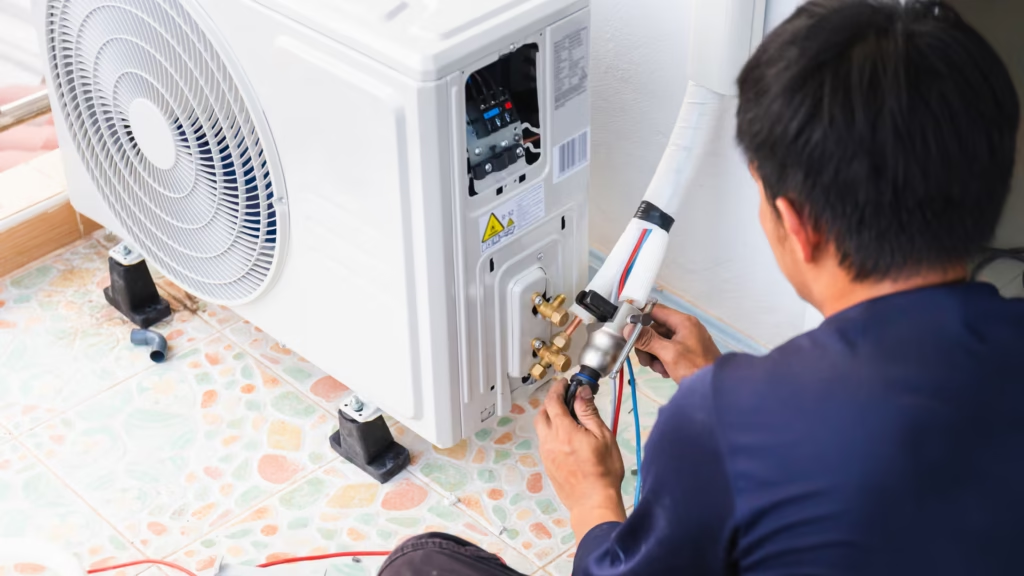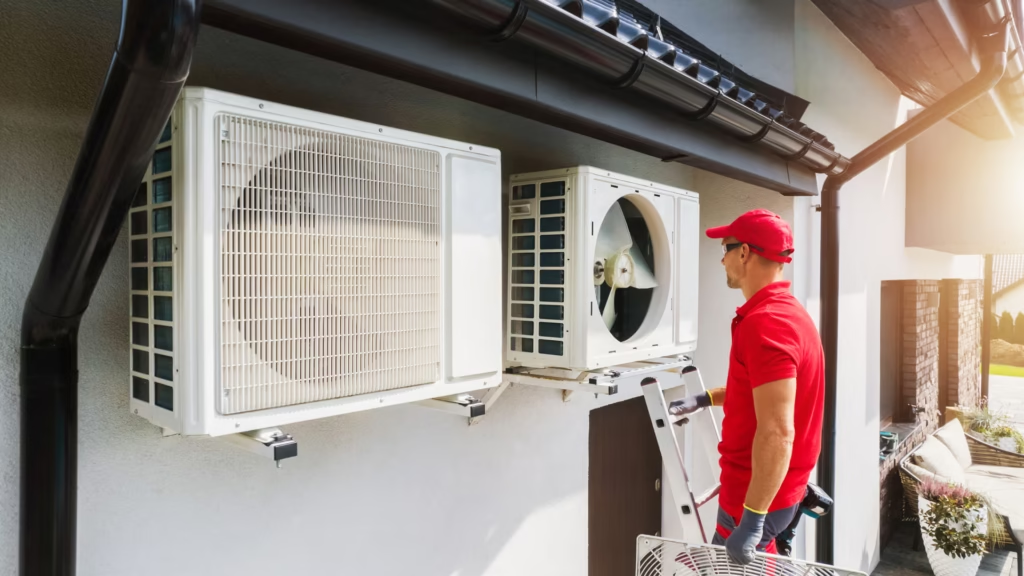
A strategic maintenance plan focuses on the few system conditions that most directly affect performance: airflow, heat transfer, drainage, controls, and safety. DOE notes that neglected filters, coils, fins, and refrigerant lines lead to declining air-conditioner performance and rising energy use. ENERGY STAR adds that dirty coils, poor airflow, improper refrigerant charge, blocked drains, and loose electrical connections all reduce efficiency and can shorten equipment life.
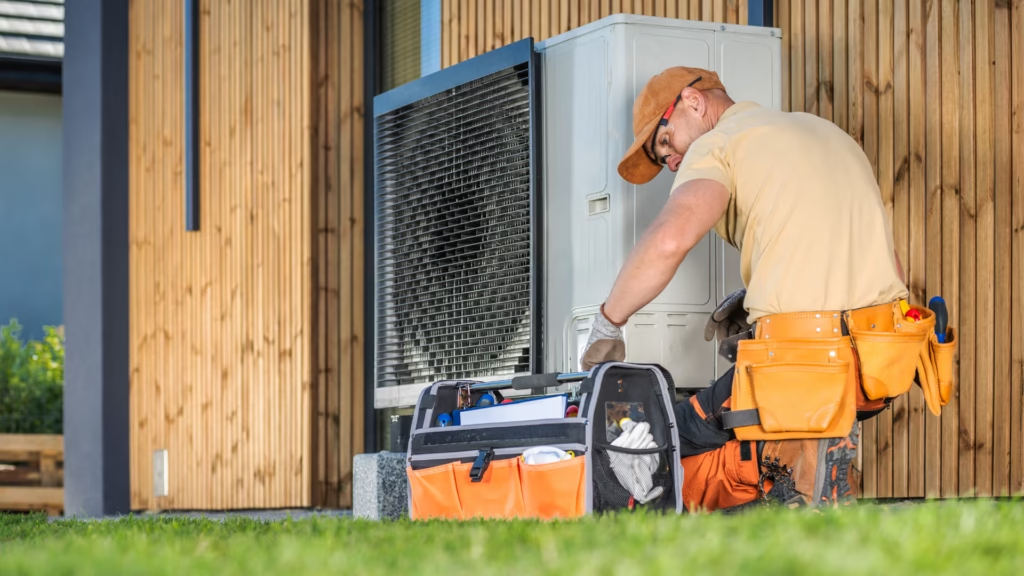
Airflow is the first priority because airflow problems quietly degrade almost everything else. A dirty filter slows airflow, makes the system work harder, increases wear, and can contribute to evaporator-coil fouling and reduced cooling capacity. ENERGY STAR recommends checking filters every month, changing them when dirty, and at minimum every three months; DOE says that if you are unsure, clean or replace filters every month or two during the cooling season, with more frequent checks for pets, constant operation, or dusty conditions. NATE’s homeowner guidance also tells owners to clean air filters monthly.
Heat transfer is the second priority. Evaporator and condenser coils need to stay clean enough to absorb and reject heat efficiently. ENERGY STAR states that dirty evaporator and condenser coils make the system run longer, increase energy costs, and reduce equipment life. DOE also recommends keeping the outdoor condenser area free of debris and trimming foliage back at least two feet so the unit can breathe properly.
Drainage is the third priority. Condensate drains exist to carry away the moisture your cooling system pulls from indoor air. ENERGY STAR warns that plugged drains can cause water damage and affect indoor humidity levels, while DOE notes that clogged drain channels can shut equipment off or lead to overflow damage. Lennox homeowner literature also tells owners to check the indoor drain line monthly for obstructions.
Controls and safety complete the picture. Thermostat settings, electrical connections, control sequences, and combustion safety checks sit on the professional side of maintenance because they affect performance and safety. ENERGY STAR’s checklist calls for testing controls, tightening electrical connections, measuring motor voltage and current, checking refrigerant levels, and verifying heating-side gas, oil, burner, and heat-exchanger conditions. ACCA’s homeowner-facing checklist specifically encourages consumers to compare maintenance proposals against the ANSI/ACCA 4 QM quality-maintenance standard.
Step-by-step homeowner maintenance procedure
The procedure below is designed to be practical, repeatable, and easy for homeowners and search engines alike to scan.
Confirm the system type and the correct manual
Before touching anything, identify whether you have a gas furnace with separate central AC, a heat pump, a packaged unit, or a ductless/mini-split system. Then locate the model number and owner literature. This matters because filter location, panel access, cover instructions, and thermostat compatibility vary by manufacturer and model. Carrier and Trane provide owner-literature lookup support, and Lennox provides model-specific homeowner manuals as well.
Shut off power before opening panels
If the task requires opening an access panel, shut off electrical power first. Trane homeowner guidance explicitly warns owners to disconnect power to both indoor and outdoor units before removing access panels, and DOE technical guidance warns that tune-ups and repairs can expose people to high-voltage electricity and other hazards that should be handled by trained technicians. If you are not fully confident that power is isolated, stop and call a professional.
Inspect and replace or clean the air filter
Find the filter at the indoor air handler, furnace cabinet, or return grille. Remove it and check for visible dust loading, gray discoloration, or collapsed media. Install the same size and type specified by the manufacturer unless your contractor has recommended a different compatible filter strategy. ENERGY STAR recommends monthly checks and at least quarterly replacement; DOE recommends monthly-to-bimonthly checks in cooling season, with more frequent replacement if the system runs constantly, the home is dusty, or pets are present.
Check supply and return airflow at the room level
Walk the house and confirm that supply registers and return grilles are open and unobstructed by rugs, furniture, or curtains. Weak airflow at several rooms may suggest a dirty filter, blocked grilles, blower issues, or duct leakage. DOE’s cooling guidance and ENERGY STAR both emphasize airflow as a core condition for efficiency, and ENERGY STAR notes that blower-related airflow problems can reduce efficiency by up to 15 percent.
Verify thermostat settings and basic operation
Confirm the thermostat mode, temperature setting, schedule, and batteries if applicable. If the system is not cooling or heating properly, an incorrect setpoint or dead batteries can mimic a larger failure. DOE’s common-problems guidance specifically lists thermostat settings among the first things to check, and NATE’s service checklist tells homeowners to be ready to tell the technician whether basic checks such as breakers and recent filter changes were performed.
Clean around the outdoor unit
Remove leaves, grass clippings, cottonwood, and other debris from the base and sides of the outdoor condenser. Trim shrubs and foliage back at least two feet. Do not pack items around the unit for storage. DOE states that outdoor condenser coils get dirty easily in dusty or leafy environments, and that adequate clearance is necessary for airflow.
Inspect the condensate drain path
Look for standing water, damp insulation, algae buildup, or a backup at the drain outlet or drain pan. DOE recommends periodically clearing drain channels with a stiff wire, while ENERGY STAR recommends checking and inspecting the condensate drain during routine maintenance because a plugged drain can cause water damage and humidity problems. If the drain is hard to access, repeatedly clogs, or is already overflowing, that moves into professional territory.
Inspect visible refrigerant-line insulation and cabinet condition
Without opening sealed refrigerant components, look for damaged suction-line insulation, obvious oil staining, rust, cabinet damage, or disconnected insulation around the air handler. These observations do not diagnose refrigerant loss by themselves, but they help you determine whether to request a professional check. DOE says refrigerant charge and leak testing belong to trained technicians.
Restore power and run a short functional test
After homeowner-safe tasks are complete, restore power and run the system long enough to verify normal startup, stable airflow, and abnormal-noise absence. NATE suggests homeowners note unusual noises, odors, leaks, and weather events before service calls because those symptoms speed diagnosis.
Record what you did
A maintenance routine becomes strategic when it is documented. Record the date, filter size, observed symptoms, thermostat settings, and any service recommendations. That history helps technicians diagnose intermittent problems faster and supports better replacement decisions later. NATE specifically advises homeowners to know the unit age, last service date, who last serviced it, and when filters were last changed.
What a professional tune-up should include
A real tune-up is more than a quick visual inspection. ENERGY STAR says a typical maintenance check-up should include thermostat verification, electrical checks, lubrication where applicable, condensate-drain inspection, control testing, coil cleaning, refrigerant verification, blower adjustment, and heating-side combustion and heat-exchanger checks where relevant. ACCA’s homeowner checklist exists so customers can compare contractor promises to recognized quality-maintenance practices under ANSI/ACCA 4 QM, which is a useful way to screen out “cheap tune-up” offers that skip load-bearing work. NATE also recommends pre-season service and NATE-certified technicians for installation and service.
For homeowners, the strategic takeaway is simple: do the low-risk, high-frequency tasks yourself, and pay professionals for the measurements, cleaning depth, electrical work, refrigerant work, combustion safety, and corrective adjustments that actually require tools, licensing, and training. DOE additionally notes that refrigerant handling must be done properly, including capturing evacuated refrigerant rather than venting it.
Season-by-season action plan
Seasonal planning matters because federal guidance specifically recommends scheduling cooling service in spring and heating service in fall, before contractor demand peaks. That timing is not just convenient; it reduces the chance that your first very hot or very cold day becomes a nuisance breakdown.
Spring checklist
Spring is the priority season for cooling readiness. Replace or clean the filter, clear debris around the condenser, inspect the condensate path, verify thermostat cooling settings, and schedule a professional cooling tune-up. DOE recommends at least two feet of clearance around the outdoor unit, and ENERGY STAR recommends spring pre-season service for cooling equipment. If your system uses ducts in an attic, crawlspace, basement, or garage, spring is also a good time to discuss leakage testing because duct sealing and insulation can significantly improve efficiency.
Summer checklist
Summer is the season of load management. Check the filter monthly, verify strong airflow at registers, watch the condensate drain during high humidity, and keep the condenser area free of heat-trapping debris. DOE’s cooling infographic says routinely cleaning or replacing filters can lower air-conditioner energy consumption by about 5 to 15 percent, and the same infographic lists dirty filters, thermostat issues, drainage problems, and ductwork defects among the most common causes of poor cooling and limited airflow.
Fall checklist
Fall is the time to prepare the heating side and to address combustion safety in homes with furnaces or other fuel-burning equipment. Change the filter, test thermostat heating mode, schedule a heating tune-up, and confirm carbon-monoxide alarm coverage. EPA, citing CPSC, says every home should have CO alarms on each level outside each sleeping area and urges annual professional inspection of fuel-burning appliances, including furnaces, to detect deadly carbon-monoxide leaks. ENERGY STAR’s checklist also calls for checking gas or oil connections, burner combustion, and the heat exchanger on applicable systems.
Winter checklist
Winter maintenance depends on equipment type. Keep return and supply grilles clear, continue monthly filter checks, and monitor for rooms that are suddenly colder than usual, which can signal airflow or duct issues. If you have a central air conditioner that is not used in winter, DOE says covering the outdoor unit may protect it from winter weather and debris. If you have a heat pump, DOE specifically says do not cover the outdoor condensing unit because covers prevent proper winter heating operation.
Safety, DIY limits, and troubleshooting
Safety precautions
HVAC maintenance becomes dangerous fast when it crosses into electricity, combustion, or refrigerant. DOE warns that tune-ups and repair can involve high-voltage electricity and other risks. Trane homeowner guidance instructs owners to disconnect power to both indoor and outdoor units before removing panels. EPA, via CPSC guidance, also emphasizes annual professional inspection of fuel-burning appliances and CO alarms for homes with combustion equipment.
For a homeowner, the safest rule set is:
- Do not open access panels unless power is fully disconnected and you understand the equipment.
- Do not handle refrigerant, gauges, or sealed refrigeration components. DOE places refrigerant checks and leak testing under trained technicians.
- Do not troubleshoot gas valves, burners, flame sensors, or heat exchangers unless you are qualified. ENERGY STAR treats these as professional heating checks.
- If you smell gas, suspect CO, see burned wiring, or find a flooded electrical compartment, stop immediately and call for service. EPA/CPSC guidance on combustion safety makes this non-negotiable.
DIY vs professional tasks
| Task | Homeowner-safe? | Why |
| Check and replace standard air filter | Yes | ENERGY STAR lists filter inspection/cleaning/replacement as a homeowner task, and DOE/NATE recommend frequent filter checks. |
| Clear leaves and debris around outdoor unit | Yes | DOE recommends keeping the condenser area clean and trimming foliage back at least two feet. |
| Verify thermostat mode, schedule, and batteries | Yes | DOE lists thermostat issues among first-line checks for common AC problems. |
| Inspect visible condensate outlet and simple drain blockage | Usually | DOE says to clear drain channels periodically with a stiff wire, but repeated clogs or poor access should be escalated. |
| Remove/replace blocked room return and supply obstructions | Yes | Airflow is foundational, and blocked grilles worsen performance. |
| Coil deep cleaning, blower service, refrigerant charge checks | No | ENERGY STAR and DOE place these in professional tune-up work. |
| Electrical testing, capacitor/contactors, motor amperage | No | ENERGY STAR specifies voltage/current checks and electrical tightening as tune-up tasks; these are not casual DIY jobs. |
| Burner, gas pressure, combustion, heat exchanger checks | No | ENERGY STAR identifies these as heating-specific professional checks. |
| Duct leakage testing and sealing strategy | Usually no | DOE and ENERGY STAR emphasize duct sealing value, but proper testing and sealing scope are usually professional tasks. |
Recommended homeowner tools and parts list
For a standard residential system, a sensible homeowner kit includes a flashlight, replacement filters in the correct size, a vacuum with a soft-brush attachment for grilles and surrounding dust, a garden hose for light exterior rinsing of the surrounding pad area only when appropriate and safe, a fin comb for minor fin straightening only if your manual allows it, a wet/dry vacuum for accessible condensate-line cleanup where appropriate, screwdrivers, nitrile or work gloves, and eye protection. DOE specifically mentions a stiff wire for drain channels and a fin comb for bent fins, while manufacturer literature emphasizes model-specific instructions and power shutoff before panel access. Pro-only tools include refrigerant gauges, recovery equipment, combustion analyzers, and live electrical diagnostic tools.
Costs, schedules, ROI, and maintenance log
Recommended maintenance schedule and frequency
The schedule below aligns federal best practice with real homeowner routines.
| Interval | Recommended action | Basis |
| Monthly during heavy-use months | Check filter; replace if dirty. Check thermostat, visible drain path, and outdoor cleanliness. | ENERGY STAR recommends monthly checks and at least quarterly replacement; DOE and NATE reinforce frequent filter checks. |
| Every 1–3 months | Replace standard disposable filter as needed by dirt loading and manufacturer guidance. | ENERGY STAR minimum quarterly baseline; DOE says monthly or bimonthly may be needed. |
| Spring | Professional cooling tune-up. | ENERGY STAR pre-season guidance. |
| Fall | Professional heating tune-up and combustion safety check where applicable. | ENERGY STAR pre-season guidance and heating-specific checks; EPA/CPSC annual inspection guidance for fuel-burning appliances. |
| Annually | Review maintenance agreement against ACCA quality-maintenance expectations. | ACCA homeowner checklist tied to ANSI/ACCA 4 QM. |
| As symptoms appear | Diagnose basics, then schedule service promptly. | DOE and NATE troubleshooting/service-check guidance. |
The best HVAC energy savings usually come from controls, ducts, filters/airflow, and when relevant, equipment upgrades. The rough payback ranges below are illustrations, not guarantees.A practical decision rule is this: maintenance first, controls second, ducts third, replacement last. If you skip the first three, even a premium new unit may underperform because dirt, leakage, and poor controls can erase much of the expected efficiency gain. That logic fits DOE’s broader whole-house guidance on combining heating/cooling improvements with weatherization and controls rather than treating the equipment in isolation.
FAQs
How often should I change my HVAC filter?
Check it every month, especially in summer and winter, and replace it when dirty. ENERGY STAR says to change it at minimum every three months, while DOE says many homes need more frequent changes during heavy cooling use, dust, or pet conditions.
Is annual HVAC maintenance really necessary?
Yes. ENERGY STAR recommends annual pre-season tune-ups because they help keep heating and cooling equipment at peak performance and reduce the chance of future problems and unwanted costs.
What should a professional HVAC tune-up include?
A real tune-up should include thermostat verification, electrical checks, drain inspection, control testing, coil cleaning, airflow work, refrigerant verification where needed, and heating-side combustion checks on applicable systems.
Can I clean my outdoor AC unit myself?
You can safely remove debris around the exterior and maintain clearance, but deeper coil cleaning or anything requiring panel removal should follow the manual and may be better left to a technician. DOE recommends keeping the area clean and foliage at least two feet back.
Why is my AC running but not cooling enough?
Common causes include a dirty filter, thermostat issues, drainage problems, dirty coils, duct leakage, restricted airflow, or refrigerant problems. DOE lists these among the most common cooling faults.
Why is my furnace not turning on?
Start with the thermostat, filter, furnace power switch, and circuit breaker. Manufacturer homeowner guidance also points to these as the most common first checks before escalating to ignition, flame-sensor, or gas-supply issues.
Should I cover my outdoor unit in winter?
If it is a central air conditioner that sits idle in winter, DOE says covering it may protect it from weather and debris. If it is a heat pump, DOE says not to cover the outdoor unit because it must operate for winter heating.
Do dirty filters really affect energy use?
Yes. DOE says routine filter cleaning or replacement can lower air-conditioner energy consumption by about 5 to 15 percent, and ENERGY STAR says dirty filters slow airflow and force the system to work harder.
Are smart thermostats worth it?
For many households, yes. ENERGY STAR says certified smart thermostats save about $50 per year on average and more in some high-bill homes, but actual value depends on occupancy patterns, climate, and system compatibility.
How do I choose the right HVAC contractor for maintenance?
Look for a qualified technician, ideally one with NATE certification, and compare the maintenance proposal against ACCA’s homeowner checklist tied to ANSI/ACCA 4 QM. That helps you verify that the contractor is offering real quality maintenance rather than a minimal inspection.