If your house feels sticky even when the thermostat says 74, you’re living with a problem a whole house dehumidifier in Florida was built to solve. Air conditioners remove some humidity as a side effect of cooling — but on the Gulf Coast, “some” often isn’t enough. Here’s why the muggy feeling persists, how to tell whether you need dedicated dehumidification, and what a whole-home unit changes.

High Humidity in House With AC Running: Why It Happens
High humidity in a house with the AC running usually traces back to one of these causes:
- An oversized AC. A too-big system cools the air fast and shuts off before it has time to wring moisture out. Short, powerful cycles equal cool-but-clammy rooms. This is the single most common cause we find in Sarasota and Manatee County homes.
- Mild, wet weather. In spring, fall, and rainy stretches, the AC barely needs to run for temperature — so it barely dehumidifies, while outdoor humidity keeps seeping in.
- Duct and envelope leaks. Leaky return ducts in a hot attic pull humid air straight into the system; gaps around doors and windows let moisture migrate indoors around the clock.
- Single-stage equipment. Older on/off systems dehumidify far worse than variable-speed systems that run long, gentle cycles.
Signs Your Home Needs Dedicated Dehumidification
Some symptoms of chronic indoor humidity hide in plain sight. Condensation on window glass in the morning. Closets and bathrooms that smell musty no matter how often you clean. Interior doors that swell and stick in summer. Towels that never quite dry. Salt clumping in the shaker. A hygrometer is the honest referee: place one in the main living area and one in the master closet, and check them across a week. If either reads above 60% regularly — especially during mild weather when the AC runs less — your cooling system alone is losing the humidity battle, and no thermostat setting will fix that. Persistent readings above 65% are urgent: that’s active mold-growth territory, and worth addressing before you’re calling our remediation team instead of our comfort team.
Why It Matters More Than Comfort
Indoor humidity consistently above 60% isn’t just unpleasant — it’s the threshold where dust mites thrive, wood floors and trim swell, and mold gets the moisture it needs to grow in closets, behind furniture, and inside walls. As a licensed mold remediation company, we see the end result of chronic humidity constantly: what starts as a sticky living room becomes a remediation project, and often shows up first as mold in the air ducts. Keeping indoor relative humidity between 45% and 55% protects your health, your home, and your belongings.
What a Whole-House Dehumidifier Does Differently
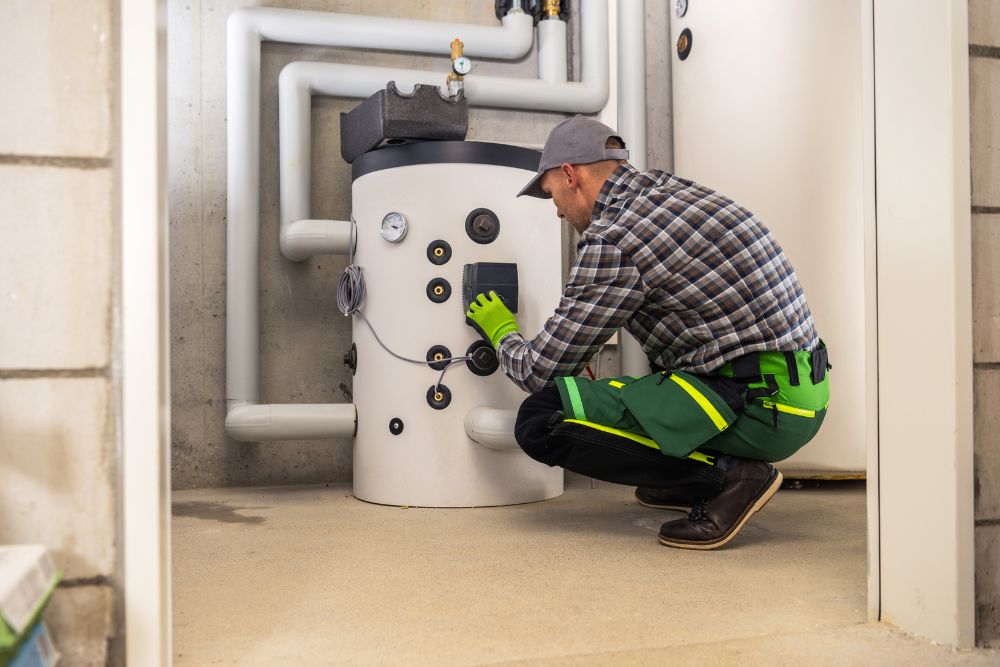
Portable units help one room and demand daily tank-emptying. A whole-house dehumidifier installs into your ductwork and works with your HVAC system: it pulls moisture from the air stream independently of cooling, drains automatically, and holds the humidity setpoint you choose — whether the AC is running or not. For Florida homes, that means dry air in April drizzle and August heat alike, no babysitting required. Most units remove 70–130 pints per day, quietly, from a closet or attic install.
The comparison with portables is worth spelling out. A typical portable dehumidifier removes 20–35 pints a day, covers one room, needs its bucket emptied daily, and adds heat and noise to the space it sits in. Covering a whole house that way means three or four machines, a daily emptying routine, and roughly the same electricity use as one ducted unit — for a fraction of the coverage. Portables have their place in a garage or a single problem room; as a whole-home strategy in a Florida summer, they lose on every measure that matters.
Sizing and Installation: What to Expect
Dehumidifiers are sized in pints of moisture removed per day, and matching the unit to the house matters as much as it does with the AC itself. A tightly built 1,800 sq ft villa might be well served by a 70-pint unit, while a larger or leakier home — or one with frequent door traffic, an indoor pool table crowd, or lots of houseplants — may need 98 to 130 pints. During an assessment we measure the home, check duct layout, and look at how the AC already handles moisture. Installation typically takes half a day: the unit ties into the return or supply side of your ductwork, gets its own condensate drain, and connects to a dedicated humidity control (or your smart thermostat). From then on it runs automatically — you set 50%, and it holds 50%.
Dehumidifier vs. Just Running the AC Colder
Plenty of Florida homeowners fight humidity by dropping the thermostat to 71 and living in a sweater. It works, sort of — colder coils condense more moisture — but it’s the most expensive possible way to dry air, and it stops working entirely on mild days. A dedicated dehumidifier uses a fraction of the energy of over-cooling, lets you keep the thermostat at a comfortable 75–77, and controls moisture even when cooling isn’t needed at all. Most homeowners find the combination cheaper to run than their old “arctic thermostat” habit, with none of the clamminess. There’s a comfort bonus hiding in the physics, too: at 50% humidity, 76°F feels like a crisp 74; at 70% humidity, the same 76 feels like a swamp. Fixing the moisture fixes the “why does it never feel cool in here” complaint that no thermostat adjustment ever solved.
Do You Actually Need One?
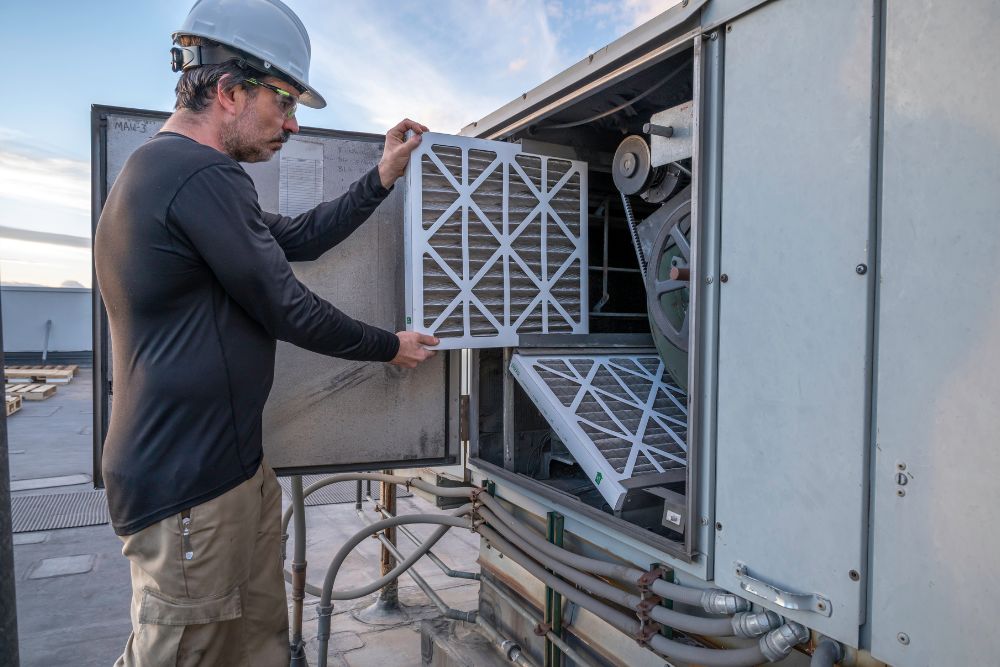
Not every muggy house needs new equipment. Sometimes the right fix is sealing return-duct leaks, correcting a fan setting (running the blower in “ON” instead of “AUTO” re-evaporates moisture off the coil — an easy mistake), or replacing an oversized system at end of life. That’s why we start with an assessment, not a sales pitch: we measure humidity, inspect ducts, and check equipment sizing before recommending anything. If your AC is also underperforming, our cooling services team can address both in one visit.
Frequently Asked Questions
What humidity level should I aim for in Florida?
45–55% relative humidity. Below 60% you stop mold and dust mites; below 45% the air starts feeling dry.
Will a dehumidifier lower my energy bill?
Often, yes. Dry air feels cooler, so most homeowners raise the thermostat 2–3 degrees without losing comfort — and the AC works less.
How much maintenance does a whole-house unit need?
Very little: a filter cleaning or swap once or twice a year and a drain-line check, which we fold into a regular maintenance plan visit. Quality units routinely last 10–15 years.
Can it be added to my existing system?
In most homes, yes. Whole-house dehumidifiers integrate with standard ducted systems; we confirm fit during the assessment.
I leave for the summer — will it protect an empty house?
This is one of the strongest use cases. A whole-house dehumidifier on its own humidistat holds a closed-up seasonal home at safe humidity all summer, even with the thermostat set high — far cheaper than running the AC cold in an empty house, and far safer than hoping for the best until October.
Tired of the sticky-house feeling? American Air Conditioning & Restoration installs whole-house dehumidification across Sarasota, Bradenton, and Lakewood Ranch. Call (941) 739-9731 or schedule a humidity assessment — and explore our full indoor air quality solutions.